Entry-Level Graphic Design Jobs: How to Get Hired With Just a Portfolio
Graphic design is one of the purest meritocracies in the professional world, which is both its most appealing and its most demanding quality. Unlike fields where credentials, institutions, and networks play a significant role in determining who gets hired, graphic design operates on a single primary criterion: the quality of your work. A designer with a first-class degree from a prestigious art school and a mediocre portfolio will be outcompeted by a self-taught designer with exceptional work every time. The portfolio is the qualification. Everything else is context.
This is genuinely good news for graduates who have strong creative instincts and the work ethic to develop them, because it means the path into the profession is as direct as the quality of what you produce. It is also demanding news, because it means that the work you put into your portfolio is the work you will be evaluated on, and there is no credential, no institution, and no certificate that substitutes for work that is genuinely good. The investment required to build a compelling portfolio is real, it takes time, and it is entirely within your control.
This guide covers the full picture of entering graphic design professionally at the entry level — what hiring managers are actually evaluating when they look at a junior designer's portfolio, which specific skills and tools matter in 2026, how to build a portfolio when you have no professional client history, the differences between agency, in-house, and freelance design environments and which is best for a first role, how the design interview and portfolio review process works, the specific types of design that are in highest demand at entry level, and what the realistic salary landscape looks like for designers at the beginning of their careers. It is written for both design graduates who want a clear picture of what the job market requires and for non-design graduates who are considering whether to build design skills as a career pathway.
What Graphic Designers Actually Do: The Real Day-to-Day
Graphic design as a profession covers an enormous range of work types, environments, and specialisations. Understanding the breadth of what is included under the label is important because the specific skills, tools, and portfolio evidence required differ significantly depending on which type of design work you are pursuing.
At the broadest level, graphic designers create visual communication — they use typography, imagery, colour, layout, and composition to communicate messages, establish identity, guide behaviour, and create emotional responses in service of a client's or organisation's goals. Within this broad definition, the specific types of work that graphic designers produce range from brand identity systems to digital advertising to editorial layouts to packaging design to environmental graphics to motion graphics to UI design.
The day-to-day work of a junior designer in a professional setting is different from what most design students imagine. A significant proportion of time is spent on production work — preparing files for print or digital delivery, making amends to existing designs, resizing assets for different formats, and maintaining consistency within established brand guidelines. This is not the creative freedom of generating original concepts — it is the disciplined execution of defined design parameters that keeps existing design systems consistent and functional. It is important and it is the primary work of most junior designers in their first year.
The conceptual and creative work — developing new visual identities, designing campaigns from brief, creating original illustration or typography — comes more as you develop trust and credibility within the team or agency. New graduates who expect to be generating original creative concepts from week one of their first role are consistently surprised to find that the first months involve significantly more production work than concept work. Understanding this in advance prevents disappointment and allows you to approach the production work with the investment and care it deserves rather than treating it as beneath you.
The collaborative dimension of professional design work is also often underestimated. Designers do not work alone — they work with copywriters, account managers, creative directors, clients, photographers, printers, and developers. Managing feedback from multiple sources, incorporating conflicting opinions diplomatically, presenting work clearly to non-designers, and defending creative decisions with coherent rationale are all as important to professional design success as visual skill. The student who excelled at individual project work but has never had to navigate a client feedback session, a creative review, or a disagreement about design direction will find the professional environment significantly more demanding in these social and communication dimensions than in purely technical ones.
The Tools That Matter in 2026
The design software landscape has shifted more rapidly in the past five years than in the previous twenty, and the tools that are standard in professional settings in 2026 are different from those that were standard in 2020. Understanding the current landscape and investing in the right tools is one of the most practically important preparation steps for entering the profession.
Adobe Creative Suite: Still Essential
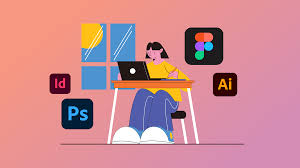
Adobe Illustrator, Adobe Photoshop, and Adobe InDesign remain the primary professional tools for graphic design work, particularly in print-focused, editorial, and brand design contexts. Despite the emergence of alternatives, the majority of established design agencies and in-house design teams still use Adobe tools as their primary production environment, and proficiency with them is a prerequisite for most graphic design roles rather than an optional extra.
The specific proficiency required at the entry level: Illustrator for vector artwork, logo design, and illustration — including anchor point manipulation, pathfinder operations, and the consistent use of global swatches and character styles; Photoshop for image editing, retouching, compositing, and photo manipulation — including non-destructive editing workflows using layers, adjustment layers, and smart objects; and InDesign for multi-page document design — including master pages, paragraph and character styles, linked files, and export for print and digital delivery. These are the skills tested in design interviews and the ones required to work effectively in a professional Adobe workflow.
Adobe's subscription pricing is a genuine barrier for many students, and it is worth noting that Adobe provides educational licensing to students at significantly reduced rates, and that the Creative Cloud Photography plan provides access to Photoshop and Lightroom at a low monthly cost for those whose primary work is photography-adjacent. For students who cannot access educational pricing, Affinity Designer, Affinity Photo, and Affinity Publisher are professional-grade alternatives with one-time purchase pricing that are accepted by many design employers as viable Adobe alternatives.
Figma: Non-Negotiable for Digital Design
Figma has become the dominant tool for digital product design, UI design, and increasingly for design systems and brand asset management. For designers targeting roles at technology companies, digital agencies, or any organisation with a significant digital product function, Figma proficiency is a prerequisite comparable to Adobe proficiency for print-focused roles. Its browser-based, collaborative architecture means that design teams can work simultaneously on shared files in ways that Adobe's desktop-centric tools do not naturally allow, which has made it the standard tool for collaborative digital design work.
The auto layout feature, component systems, and prototyping capabilities of Figma are the specific areas where entry-level digital designers are most commonly assessed and where the difference between surface-level familiarity and genuine proficiency is most evident in portfolio work and interview demonstrations. Invest deliberate time in these areas specifically.
Motion Graphics: An Increasingly Required Skill
The growth of social media platforms optimised for video content — Instagram Reels, TikTok, YouTube Shorts — has created significant demand for designers who can produce motion graphics alongside static design. Adobe After Effects is the professional standard for motion graphics work, and basic proficiency — the ability to produce simple animated logos, text animations, and video social media assets — is becoming increasingly expected for entry-level roles in digital marketing agencies and social media-focused in-house teams.
For designers who can produce compelling motion content alongside strong static design work, the combination is genuinely differentiating in the current market because it is less common than either skill alone. Adding a motion component to your portfolio — even simple logo animations or typographic motion pieces — immediately expands the range of roles you are competitive for.
Building a Portfolio That Gets You Hired
The portfolio is where graphic design careers are won and lost, and building one that genuinely demonstrates professional-level work requires understanding both what hiring managers are looking for and what the common weaknesses of graduate portfolios are. The gap between these two things is where most preparation effort should be directed.
What Hiring Managers Evaluate
When a creative director or design manager reviews a junior designer's portfolio, they are evaluating several dimensions simultaneously. Visual quality is the most obvious — does the work look good, does it demonstrate an understanding of composition, typography, and colour that suggests genuine design education and taste? But it is not the only dimension, and for many hiring managers it is not the primary one.
Conceptual thinking matters as much as visual execution. A design that solves a problem — that communicates a message clearly, that creates a specific emotional response, that guides user behaviour in a defined direction — is more valuable than a design that looks beautiful but has no apparent purpose. The ability to articulate the concept behind a design choice, to explain why you made the decisions you made in terms of the brief and the audience rather than purely in terms of aesthetics, is the distinction between a designer who can be directed and one who can think.
Range demonstrates versatility. A portfolio that shows only one type of work — only logos, only poster designs, only social media graphics — suggests a designer who has a narrow skill set that may not transfer to the diverse requirements of a professional role. A portfolio that shows work across different media, different styles, different audiences, and different constraints suggests a designer who can adapt to new briefs and requirements rather than applying the same approach regardless of context.
Finish quality signals professional standards. Work that is presented with careful attention to detail — consistent crop marks, accurate colour profiles, properly kerned typography, appropriately sized exports — signals that the designer understands and applies professional production standards. Work that shows sloppy finishing — awkward spacing, inconsistent alignment, obvious compression artefacts in digital work — signals the opposite, regardless of how strong the concept is.
The Portfolio Structure That Works
A graphic design portfolio for an entry-level role should contain between eight and twelve pieces of work, presented with brief contextual notes for each project. The notes should explain: the brief or context for the project, the design decisions made and their rationale, and any specific constraints or challenges the project involved. This context transforms the portfolio from an image gallery into a demonstration of design thinking.
Lead with your strongest work. The first piece in your portfolio is the one that sets expectations for everything that follows. If it is weak, hiring managers form a negative initial impression that the rest of the portfolio must overcome. If it is your best work, they form a positive impression that the rest of the portfolio sustains. The common instinct to save the best for last is exactly backwards for design portfolios.
Include a range of work types that demonstrates versatility across at least three of the following: brand identity (logo design, brand guidelines, stationery), print design (editorial, brochures, packaging), digital design (web, social media, digital advertising), typography-focused work, illustration or image-based work, and motion or interactive design. A portfolio that demonstrates genuine capability across multiple formats is significantly more useful to most employers than one that shows deep specialisation in a single area, because most entry-level roles require versatility.
Remove any work that is genuinely below the standard of your best pieces. A portfolio of ten strong pieces is considerably stronger than a portfolio of ten strong pieces plus six mediocre ones. The mediocre pieces do not demonstrate range — they demonstrate inconsistency, and inconsistency in a designer is a risk that hiring managers prefer to avoid.
Building Portfolio Work Without Client History
The projects that produce the strongest portfolio work for designers without client history fall into several categories. Self-initiated briefs — designing for a brand, product, or cause that you genuinely care about, as though you had received a real professional commission — produce work that is motivated by genuine interest and often of higher quality than work done for purely theoretical exercises. A rebrand of a local charity whose visual identity you find weak, a packaging design for a fictional food brand whose values resonate with you, a type-driven poster series for a cause you care about — all of these are valid portfolio pieces when executed with professional rigour.
Student design competitions provide real briefs with real constraints and often real judging by industry professionals. The D&AD New Blood Awards, the YCN (Young Creatives Network) competition, and various regional and discipline-specific design competitions all accept student and recent graduate entries and provide the external validation of recognition or placement that client work would otherwise provide. Winning or placing in a recognised competition is a portfolio piece that carries genuine professional credibility.
Volunteering design services for non-profit organisations and community groups produces real client experience — a real brief, real feedback, real constraints — and a tangible deliverable that has been deployed in the world. This is more compelling than speculative work precisely because it involves the messy reality of a real client relationship, which is ultimately what professional design practice consists of.
Agency Versus In-House: Choosing Your First Design Environment
The two primary environments for entry-level graphic designers are design and advertising agencies, which work with multiple clients across different industries, and in-house design teams, which produce all their design work for a single organisation. Both offer distinct advantages and disadvantages at the entry level, and the right choice depends on what you want from your first professional experience.
Agency environments provide variety — you work on different brands, different briefs, different industries, often in the same week. This variety accelerates skill development because you are constantly adapting to new constraints and requirements, and the volume of work produced in agency settings is typically higher than in-house, which means more opportunities to develop proficiency through practice. Agency environments also typically have stronger creative culture, closer proximity to creative directors and senior designers who provide constant feedback, and the professional reputation that comes from working on recognisable client accounts.
The trade-offs of agency work are a culture that can be demanding in terms of hours and deadlines — agency timesheets are real, and the pressure of client deadlines in an environment where multiple clients have simultaneous urgencies is a consistent feature of agency life. Entry-level salaries at agencies are typically at the lower end of the design market, reflecting the training and portfolio development value the agency provides.
In-house design environments provide depth — you develop genuine expertise in a specific brand, a specific industry, and a specific audience over time. The pace is typically more sustainable, the creative work is often more strategic (designing at the level of brand systems rather than individual executions), and the salary at well-resourced in-house teams — particularly at technology companies — is typically above agency rates at equivalent levels of experience.
For most entry-level designers, the agency environment produces faster skill development and more diverse portfolio material in the first two to three years, which makes it the more common recommendation as a starting point. But the best starting environment is the one where you will be working under creative directors whose work you respect and who are invested in developing the people who work for them — regardless of whether it is an agency or in-house setting.
The Design Interview and Portfolio Review
Design interviews have a specific structure that differs from most other professional interview formats. The portfolio review — which is typically the primary component of the interview — assesses creative quality, design thinking, and the ability to articulate your process and decisions. The questions asked during a portfolio review are rarely about the visual output alone; they are almost always about the thinking that produced it.
Prepare to discuss every piece in your portfolio at depth. For each project: what was the brief or context? What options did you explore before arriving at this solution? What specific typographic, colour, or compositional decisions did you make and why? What feedback did you receive and how did you respond to it? What would you do differently now? These questions test whether you understand the reasoning behind your own work, which is the foundational question about whether you can be directed toward better work through feedback or whether your instincts operate independently of rationale.
The live design exercise — a brief creative task given during the interview — assesses how you work under pressure and how you approach a new brief from scratch. Narrate your thinking as you work. Show your initial sketch thinking, your exploration of different approaches, your reasoning for the direction you choose. The interviewer wants to see your process, not just your output — and a thoughtful, explained process is more impressive than a slick output produced in silence.
The Freelance Route: An Alternative First Step
For designers who have not secured an employed position immediately after graduation, or who prefer the flexibility and independence of self-directed work, freelancing is a legitimate and often productive alternative as a first career step. Platforms like Upwork, Fiverr Pro, and 99designs provide access to client work relatively quickly, though at rates that are typically lower than employed design positions. Local networking — through business associations, community groups, and direct outreach to small businesses in your area — provides higher-value freelance clients who are willing to invest more in quality work.
The freelance route builds a real client portfolio faster than many employed routes because you are working with diverse real clients from the start. The trade-off is the absence of the mentorship, structured development, and creative culture that a good employed design environment provides. Many designers who begin their careers freelancing move into employed positions after two to three years once they have a strong portfolio and the professional credibility that client work creates.
Browse all verified entry-level graphic design and creative design positions at Job Foundry Hub — including agency roles, in-house positions, and junior creative opportunities across all design specialisations.

Expert career coach and recruitment specialist with over 15 years of experience helping recent graduates land their dream jobs.